Digital Product Passport (DPP)
Requirements, deadlines and preparations
The EU is introducing digital product passports for an increasing number of product groups. The goal is greater transparency, better traceability, and a more circular economy. Here is a simple overview of what the DPP is, who is affected, key deadlines, and what businesses should do now.
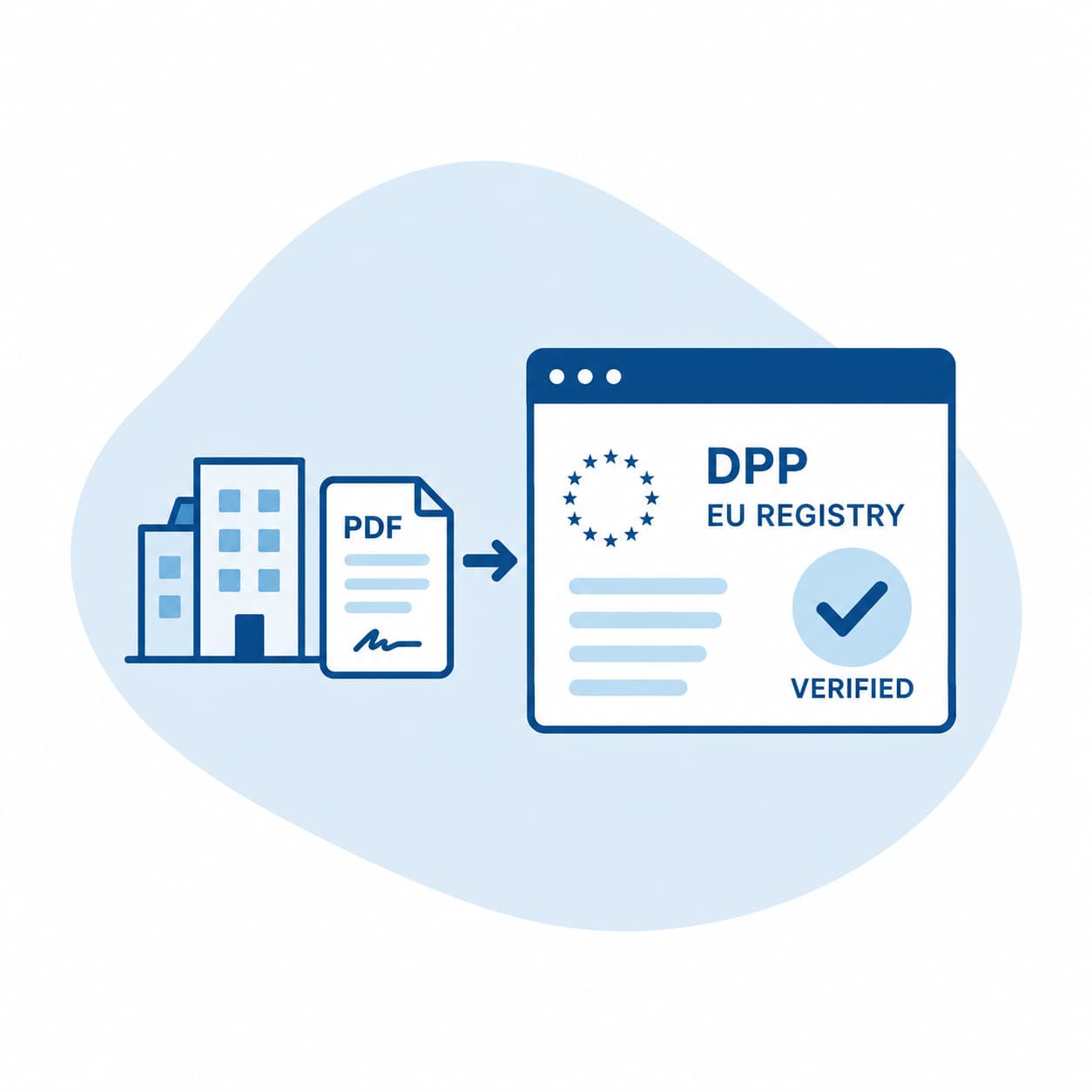
First product group subject to DPP requirements: batteries, effective February 18, 2027.
What is DPP?
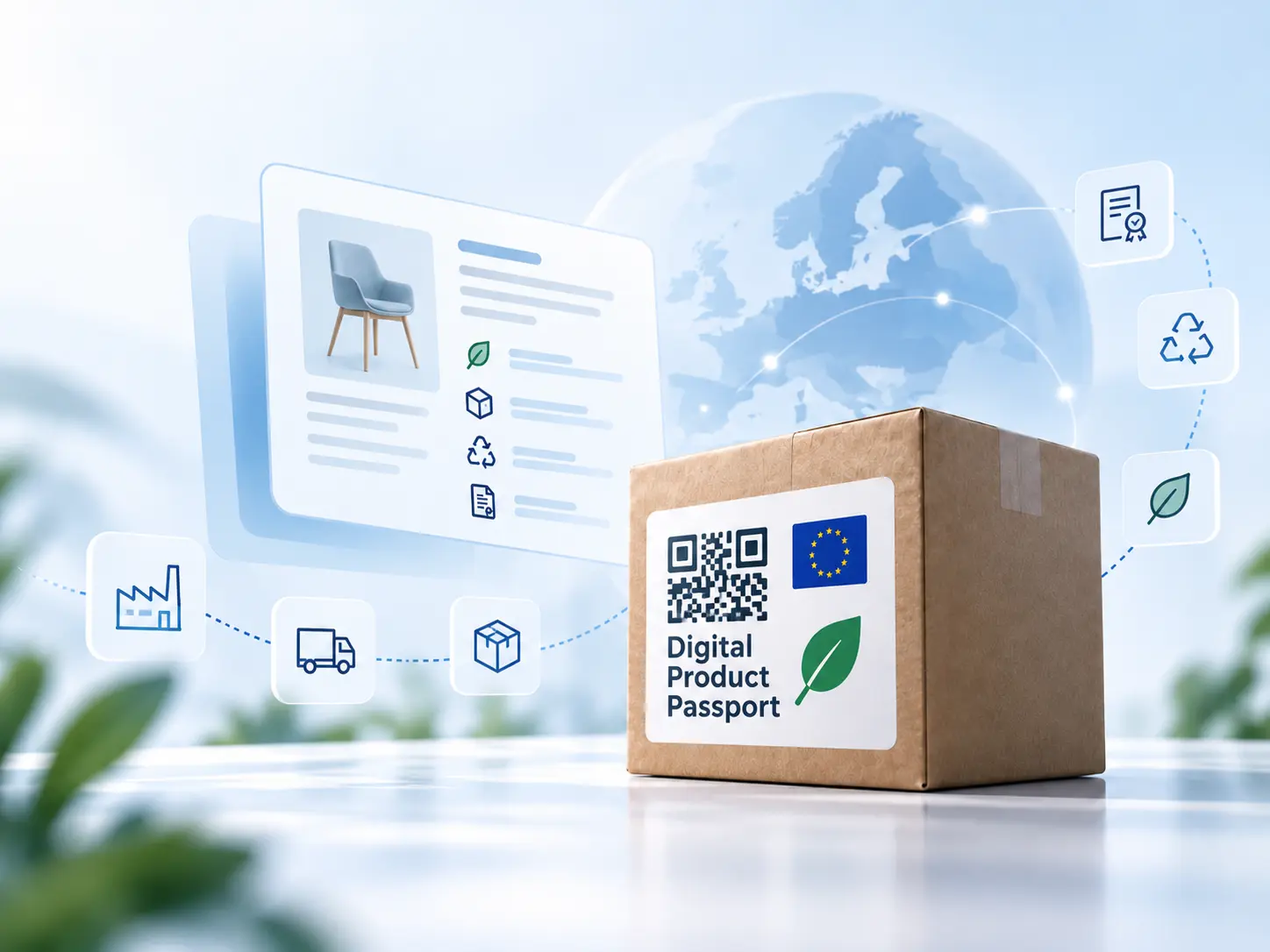
A digital product passport that is linked to the product and provides access to information on, among other things, its identity, materials, properties, repair, reuse, and recycling.
Which businesses are covered?
Manufacturers, importers, and other economic operators who place products subject to DPP requirements on the EU market. The requirements are being phased in gradually for different product groups.
What is the DPP Registry?
The DPP Registry is the European Commission’s central registry for digital product passports. Product identifiers and basic information are recorded here, while the complete product data is typically stored in a decentralized manner by the company or a DPP service provider.
How should the company prepare?
Determine which products are covered, map the product data, choose how the information will be stored, and prepare for registration and verification in the DPP registry.
DIGITAL PRODUCT PASSPORT
What is a Digital Product Passport (DPP)?
A Digital Product Passport (DPP) is a digital source of information linked to a product, component, or material. The passport makes relevant product information available throughout the product’s entire lifecycle, from production and sale to repair, reuse, and recycling.
The information may include, among other things, the product’s identity, materials and composition, technical characteristics, performance, durability, repair, maintenance, and recycling. The specific information required is determined by the regulations governing the relevant product group.
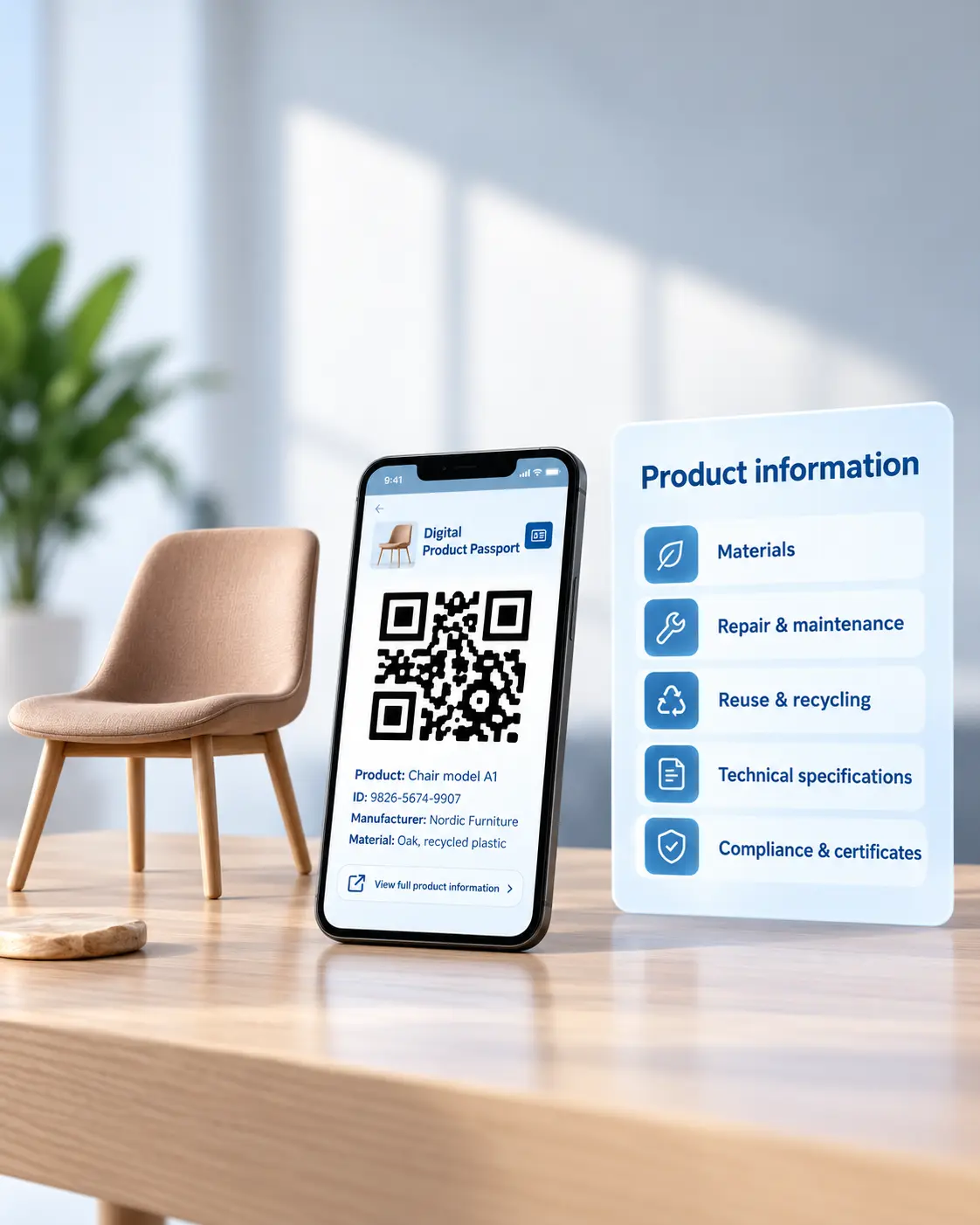
The product passport can be opened by scanning a data carrier, such as a QR code on the product, the packaging, or the documentation accompanying the product. Different users can access different information, depending on their role and the applicable access rules.
In short
The QR code is the gateway to the product passport — not the product passport itself.
The complete product information is available in a digital solution that the QR code links to.
WHO IS COVERED?
Which businesses are subject to DPP requirements?
The DPP requirements do not apply to all products at the same time. They are being phased in through separate EU regulations for different product groups. Businesses must therefore first determine whether their products are subject to existing or upcoming DPP requirements — and when those requirements take effect.
Responsibility normally lies with the economic operator who places the product on the EU market. Depending on the product group and the regulations, this may include the manufacturer, the importer, an authorized representative, the distributor, or another responsible economic operator.
The requirements may also apply to products manufactured outside the EU. The decisive factor is whether the product is covered by the DPP regulations and is intended to be made available on the EU market.
In short
What matters is not where the product is manufactured, but which company is responsible for the product when it is sold on the EU market.
Timeline for the Digital Product Passport
THE DPP REGISTRY
What is the DPP Registry?
The DPP Registry is the European Commission’s central registry for digital product passports.
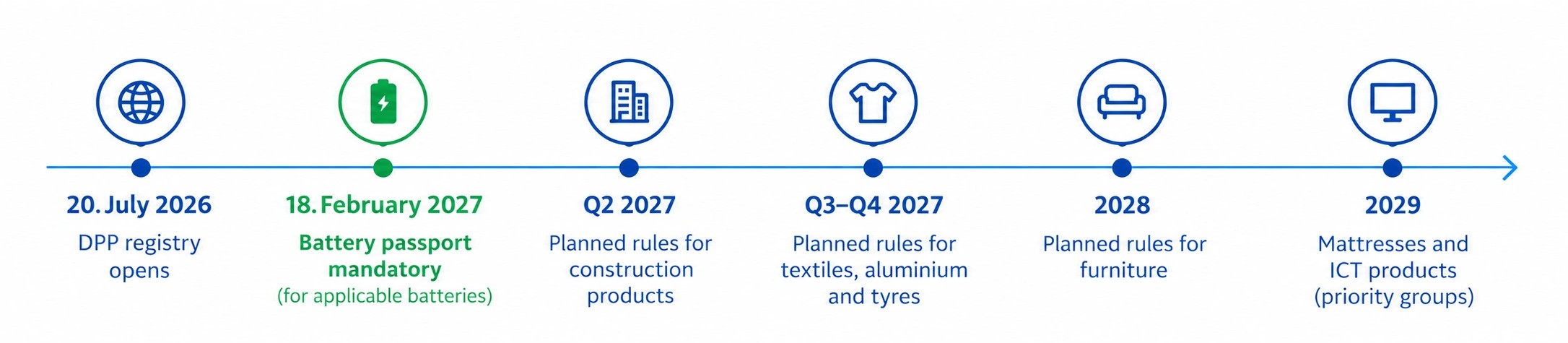
When a DPP is registered, the product’s unique identifier and basic registration information are stored in the registry. The product passport itself and the complete product data are stored by the company or a DPP service provider. The registry thus serves as a common EU-wide overview that links the product to the correct digital product passport.
The information may include, among other things, the product’s identity, materials and composition, technical characteristics, performance, durability, repair, maintenance, and recycling. The specific information required is determined by the regulations for the relevant product group.
The product passport can be opened by scanning a data carrier, such as a QR code or another machine-readable code on the product, its packaging, or the documentation accompanying the product. Different users can access different information, depending on their role and the applicable access rules.
In short
The DPP registry does not store the entire product passport.
It links the product identifier to the digital product information made available by the company or a service provider.
PRACTICAL PREPARATION, STEP BY STEP
How to prepare your business for DPP
01
Find out if your products are subject to DPP requirements
Start with the product regulations that apply to your product group. Batteries are first in line: Starting February 18, 2027, EV batteries, LMT batteries, and industrial batteries with a capacity exceeding 2 kWh must have a Battery Passport. Other product groups will follow gradually.
02
Identify what product data you have — and what's missing
Determine what data is already available in ERP, PIM, PLM, or other product systems, and what information you need to obtain from suppliers. For batteries, the European Commission has published a separate overview with 71 data points and information on which ones will apply starting in February 2027.
03
Determine how DPP data should be stored and made available
The product data itself is not stored in the DPP registry. The business must therefore have a solution to store and make the data available on its own, or use a DPP service provider. The DPP registry stores, among other things, product identifiers and registration data.
04
Prepare your business for registration in the DPP registry
Create an EU Login account and familiarize yourselves with the registration process. The European Commission has already launched a test environment where businesses can try out the features and the onboarding process without affecting production data.
05
Make sure your business has a Qualified eSeal (QSeal)
For legal entities using the PDF-based verification process, a qualified electronic seal (QSeal) can be used to verify the entity’s identity. Make sure the legal business name, country of registration, and registration identifier are correct when placing your order—this information must later match the registration in the DPP. Commfide issues qualified eSeals to businesses throughout the EU/EEA and offers free support. We’ll guide you through the verification process — from ordering and the first sealing to troubleshooting if the verification is rejected.
06
Test the verification
Before a business can register DPPs, it must be registered and verified in the DPP registry. For legal entities, a qualified electronic seal (QSeal) can be used in the PDF-based verification process. Start early — especially if you are subject to the Battery Passport as of February 18, 2027.
How long does DPP verification take?
The validity period of the QSeal directly affects how long the business can retain its verified status in the DPP registry. This status is maintained until the eSeal used during verification expires, but for a maximum of 3 years. Commfide’s QSeal is valid for 3 years. The company can therefore remain verified for up to 3 years before a new DPP verification is required.
With a QSeal that is valid for only 1 year, the business must undergo verification again when the certificate expires if it wishes to continue registering new product passports or updating information in the DPP registry.
QUALIFIED ESEAL AND DPP
How to Use a Qualified eSeal in DPP Verification
Before a business can register digital product passports, it must be verified in the DPP registry.
For a business using the PDF-based verification process, a qualified electronic seal (QSeal) can be used to confirm the business’s identity. The business downloads a PDF declaration from the DPP registry, seals it with its qualified eSeal, and uploads it again for verification.
Commfides provides qualified eSeals to businesses throughout the EU/EEA. Free support is included, and we guide you through the verification process – from ordering and using the eSeal to checking the PDF and troubleshooting if the verification is rejected.
The approval process itself is handled by the DPP Registry, but you can contact Commfides if you need help understanding what needs to be corrected.
Read more about DPP verification

How to verify your business in the DPP Registry
A practical step-by-step guide from EU Login and business information to a sealed PDF and a verified business.
View the step-by-step guide →

Qualified eSeal (QSeal) for DPP
Read why businesses need QSeal in the PDF-based verification process, and how to place an order.
Read about QSeal for DPP →
FAQ
Frequently Asked Questions About DPP
Brief answers based on the European Commission’s DPP Registry User Guide for Economic Operators.
A Digital Product Passport is a digital source of information associated with a product, component, or material. The passport may contain information on, among other things, product identity, materials, properties, repair, reuse, recycling, and documentation confirming that the product meets relevant requirements. The specific information required depends on the product group and the applicable regulations.
No. The DPP is being phased in gradually for different product groups. Certain batteries are the first to be covered, while textiles, iron and steel, aluminum, furniture, and other product groups will follow according to their own EU regulations and timelines.
It depends on the product group. Starting February 18, 2027, the Battery Passport will be mandatory for EV batteries, LMT batteries, and industrial batteries with a capacity exceeding 2 kWh that are covered by the regulations. Other product groups will have their own requirements and deadlines announced at a later date.
Yes. If a product is subject to DPP requirements and is to be placed on the EU market, those requirements also apply to imported products. The responsible economic operator must ensure that the product has a DPP and that it is registered in the DPP registry before the product is placed on the market.
The DPP is the product passport itself, containing the product information. The DPP Registry is the European Commission’s central registry and indexing service where, among other things, unique product identifiers, registration data, and general metadata are recorded. The complete product data is normally stored in a decentralized manner at the company or with a DPP service provider.
Responsibility lies with the economic operator who, under the applicable regulations, is responsible for placing the product on the EU market. This may include, among others, the manufacturer, importer, authorized representative, distributor, or another economic operator. The responsible operator must, among other things, ensure that product data is accurate, that the product is registered, and that the information is kept up to date.
Start by determining whether your products are subject to DPP requirements. Next, identify what product data you already have, what information is missing, and how the data should be stored and made available. Your company should also familiarize itself with the DPP registry and prepare for the registration and verification process well in advance of the deadline.
Yes. Only verified economic operators can register digital product passports in the DPP registry. For legal entities, a qualified electronic seal (QSeal) can be used as proof of the entity’s identity during the verification process.
Read about qualified eSeals for DPP → See the step-by-step guide to business verification →
Last updated: October 2026
This guide is based on the European Commission’s DPP Registry User Guide for Economic Operators, version 1.03, published on September 16, 2026.
PRIMARY SOURCES
Read more on the European Commission's website
DO YOU NEED HELP?
Ready to verify your business in the DPP registry?
Order a qualified eSeal from Commfides, or contact us if you have any questions.


